

Hormonal imbalances, vaginal dryness, chronic pain conditions, and psychological factors like stress or relationship strain drive female sexual dysfunction, presenting as low desire, difficulty reaching orgasm (anorgasmia), or pain during intercourse. Licensed Ob/GYNs at Her Smart Choice evaluate these overlapping physical and emotional causes through private consultations, building personalized treatment plans that restore comfort, confidence, and satisfaction in intimate health.
Get SOCIAL with us!
A recognized medical term for ongoing sexual problems that cause real distress, not a label for an occasional off night.
Female sexual dysfunction describes ongoing sexual problems that cause real distress, either to a woman or to her partner. This is not a vague label for occasional bad nights. It's a recognized medical term covering disruptions to desire, arousal, orgasm, or comfort during sex.
Sexual problems touch a large share of women's lives at some point. For some, the issue surfaces once and fades. For others, it lingers, showing up in every intimate encounter over months or years.
What makes diagnosis tricky is the sheer number of moving parts involved. Sexual response draws on the body's physical mechanics, but it doesn't stop there. Emotions, daily stress, personal beliefs, lifestyle habits, and the dynamic between partners all shape how a woman experiences intimacy.
Sexual response rarely comes down to one single trigger. It reflects an interplay of physical health, emotional state, life circumstances, personal values, lifestyle choices, and relationship quality. A shift in any one of these areas can throw the entire system off balance.
Not necessarily. A stressful week or an isolated episode of low desire doesn't automatically qualify as dysfunction. The distinction lies in persistence and distress. When problems recur and cause ongoing frustration, medical evaluation becomes worthwhile.
Because so many causes of female sexual dysfunction trace back to underlying physical conditions, addressing root health issues matters. Her Smart Choice supports this process through STD testing and treatment, UTI care, and follow-up for abnormal Pap smear results, services that target conditions capable of disrupting comfort, desire, and overall sexual well-being. Our guides on UTI symptoms, causes, treatment, and prevention and types of STD tests for women cover what that evaluation can look like.
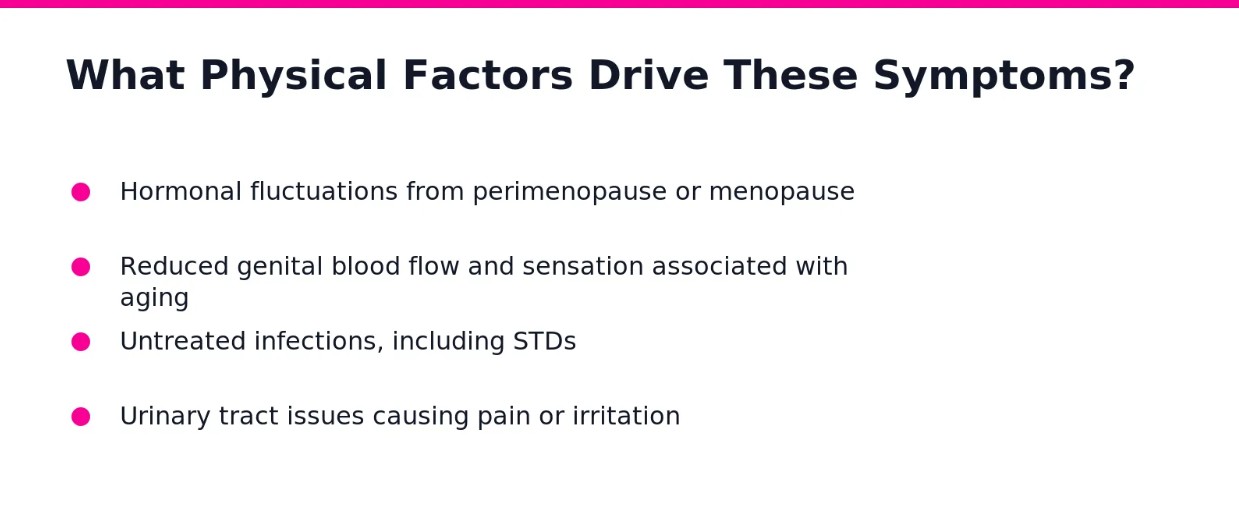
Hormonal shifts from perimenopause and menopause, age-related changes in blood flow, and untreated infections are among the most common physical contributors.
Hormonal shifts rank among the most common causes of female sexual dysfunction. Perimenopause and menopause both bring measurable changes in hormone levels, and those changes directly affect desire and physical comfort during intimacy. Falling estrogen thins vaginal tissue and reduces natural lubrication, which turns what once felt pleasurable into something uncomfortable or even painful.
Aging itself plays a separate, distinct role. According to a review published in American Family Physician, delayed or less intense orgasms can reflect a natural process of aging tied to decreased genital blood flow and dulled sensation, rather than a sign that something is fundamentally wrong. Recognizing this distinction matters: an aging-related change calls for a different conversation than a hormonal or infection-driven one.
Yes. Untreated infections and urinary issues frequently contribute to physical pain during sex. Left unaddressed, they tend to worsen over time. This is why STD testing and treatment, along with UTI treatment, remain core services for patients reporting new or worsening discomfort. Our guide on symptoms of a UTI infection and why you need to get tested for STDs can help you recognize when this might be a factor.
Physical causes rarely travel alone. A patient might experience hormonal changes alongside an undiagnosed infection, or age-related sensation changes compounded by tissue dryness. Sorting out which factor, or combination of factors, is driving symptoms requires a clinical evaluation, not guesswork.
Common physical contributors include hormonal fluctuations from perimenopause or menopause, reduced genital blood flow and sensation associated with aging, untreated infections, including STDs, and urinary tract issues causing pain or irritation.
Licensed Ob/GYN physicians conduct private consultations to identify the specific physical drivers behind each patient's symptoms. Because these causes vary so widely from one woman to the next, treatment plans are built individually rather than applied as a one-size-fits-all protocol. That personalized approach gives patients a clearer, more accurate path toward relief.
Depression and anxiety are recognized contributors, not just side effects, since they interfere directly with the physiological steps behind arousal.
Emotional health shapes desire, arousal, and satisfaction as directly as physical health does. Depression and anxiety rank among the documented causes of female sexual dysfunction, affecting how the brain and body respond to intimacy. A woman managing persistent worry or low mood often notices her interest in sex fading long before she connects the two.
These mental health conditions don't just dampen mood. They interfere with the physiological steps behind arousal, including blood flow, lubrication, and the ability to reach orgasm. Stress hormones triggered by anxiety can override signals the body needs for sexual response, creating a cycle where emotional strain produces physical symptoms, and those symptoms add further worry.
Yes. Depression and anxiety are recognized psychological contributors to sexual dysfunction, not just emotional side effects. Anxiety can heighten muscle tension and interfere with arousal. Depression often blunts desire and reduces the capacity to feel pleasure. Addressing the underlying mental health condition frequently improves sexual function alongside it.
Many women feel embarrassed discussing mood, trauma, or anxiety in a sexual health context, so they delay seeking help. Confidential handling of personal information, including contact details collected during a visit, allows patients to discuss sensitive emotional history without fear of exposure. That privacy protection matters most when the topic feels difficult to raise at all.
Because emotional causes are sensitive to bring up, delays in care compound the distress. Same-day appointment availability gives women a way to address these concerns quickly, rather than sitting with unanswered questions for weeks. A licensed Ob/GYN can evaluate whether depression, anxiety, or another emotional factor is contributing and outline next steps during that visit.
This condition is rarely one thing. Effective care looks at biological, psychological, social, and relational factors together, not in isolation.
A single-cause explanation rarely solves a sexual health concern. Multiple systems, hormonal, emotional, and relational, usually contribute at once, and treating only one piece leaves the others unaddressed. A review published in American Family Physician describes sexual dysfunction in women as a common and often distressing problem with a real negative impact on both quality of life and follow-through with treatment. That last point matters: a woman who feels unheard or misdiagnosed is less likely to stick with a care plan that could actually help her.
The same research identifies the problem as multifactorial, noting that effective evaluation requires a multidisciplinary approach that looks at biological, psychological, sociocultural, and relational factors together, rather than isolating symptoms into separate silos. A diagnosis built this way reflects the whole picture, not a fragment of it.
Coordinated evaluation typically draws on gynecological exams, hormonal assessment, and open conversation about stress, relationship dynamics, and mental health. No single test captures all of that; a licensed Ob/GYN weighing each factor together produces a more accurate, actionable plan.
Regional access supports this kind of coordinated care. Her Smart Choice serves patients across the Los Angeles area, Orange County, and Ventura County, with locations in East LA, Huntington Park, Long Beach, and Van Nuys. That geographic reach shortens the distance between a woman noticing a change and reaching a clinician equipped to evaluate it fully.
Clinical experience reinforces this model. Operating since 2006, the practice has built nearly two decades of evaluation experience suited to cases where no single cause explains the symptoms.
TL;DR: Persistent changes in desire, arousal, or comfort deserve an evaluation, and same-day scheduling means you don't have to sit with the question for weeks.
Persistent changes in desire, arousal, or comfort during sex deserve a clinical evaluation, not silent worry. Women across the Los Angeles area have direct access to a licensed clinic built to investigate the causes of female sexual dysfunction rather than dismiss them as ordinary stress. Waiting rarely resolves these symptoms on its own; a proper exam identifies hormonal, physical, or medical factors that self-diagnosis misses.
The clinic operates as Cathedral Medical Inc., the legal name behind Her Smart Choice's Los Angeles practice. That formal licensing structure matters: it reflects an established medical operation, not a walk-in wellness shop, and it means patients receive evaluation from a formally credentialed practice rather than an informal service.
Scheduling works the same day in many cases, removing the wait times that often delay women from addressing sexual health concerns. Delaying an appointment allows treatable issues, hormonal shifts, pain conditions, or arousal disorders, to persist longer than necessary. Same-day access shortens that gap between noticing a symptom and getting a clinical answer.
Her Smart Choice's staff supports patient care, scheduling, and follow-up needs, allowing the practice to manage everything from the first phone call to ongoing treatment planning without gaps in communication.
Local access matters most when symptoms feel confusing or embarrassing to describe. A nearby, licensed clinic with same-day availability and a supporting staff turns a vague concern into a concrete evaluation. Waiting for symptoms to resolve on their own often costs women months of unnecessary discomfort that a same-day visit could shorten considerably.
Hormonal imbalances, vaginal dryness, chronic pain conditions, and psychological factors like stress or relationship strain drive female sexual dysfunction. These issues present as low desire, difficulty reaching orgasm, or pain during intercourse.
No, a stressful week or isolated episode of low desire does not qualify as dysfunction. The distinction lies in persistence and distress, where recurring problems cause ongoing frustration and warrant medical evaluation.
It's common. Research published in American Family Physician estimates that sexual dysfunction symptoms affect 40% to 50% of women, though it's only classified as a diagnosable disorder when the symptoms are persistent and cause real distress.
Licensed Ob/GYNs at Her Smart Choice evaluate overlapping physical and emotional causes through private consultations. They build personalized treatment plans and offer STD testing, UTI care, and abnormal Pap smear follow-ups targeting underlying conditions.
Understanding the multifaceted causes of female sexual dysfunction, whether physiological, psychological, or relational, can help you seek appropriate care and reclaim your sexual health. Comprehensive evaluation by qualified healthcare providers remains essential for accurate diagnosis and personalized treatment planning. Women experiencing sexual concerns deserve compassionate, evidence-based support that addresses their unique circumstances and restores confidence in their intimate lives.
Get SOCIAL with us!


.png)
.png)

East LA: 2226 E Cesar E Chavez Ave, Los Angeles, CA 90033, United States
Van Nuys: 7220 Woodman Ave #106, Van Nuys, CA 91405, United States
Long Beach: 1760 Termino Ave #223, Long Beach, CA 90804, United States
Huntington Park: 7024 Seville Ave Suite A, Huntington Park, CA 90255, United States
©2006 – 2026 HER SmartChoice, DBA Cathedral Medical Inc. | Sitemap | Terms & Conditions | Privacy Policy





.svg)
.svg)