

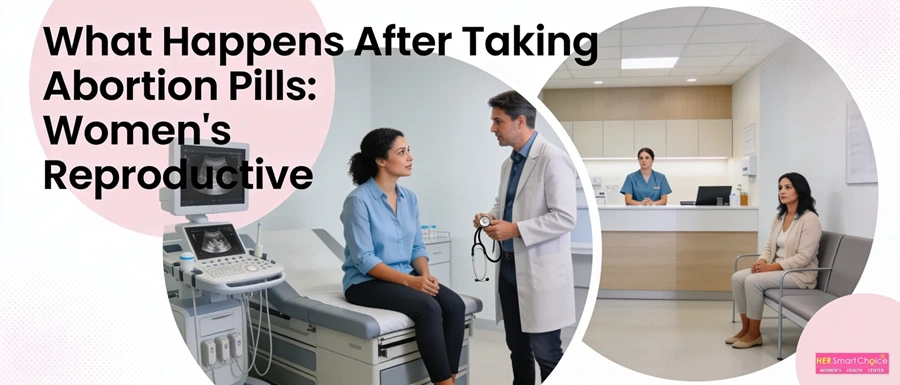
Cramping and bleeding begin within hours after taking misoprostol, following mifepristone, and continue for several hours or more as the uterus clears pregnancy tissue. Vaginal discharge shifts from heavy bleeding to lighter spotting over days to weeks. Rest matters during the first day, and Her Smart Choice clinicians monitor recovery and address any signs of infection or complications promptly.
Get SOCIAL with us!
Cramping and bleeding begin within hours for most patients, an expected effect as the uterus clears pregnancy tissue. These symptoms are a normal part of the process, though a follow-up visit is still the most reliable way to confirm the pregnancy has fully ended. Understanding what happens after taking abortion pills helps patients prepare rather than panic when symptoms start. The process unfolds gradually rather than all at once, and comfort matters as much as medical accuracy. Our guide on what to expect when you take abortion tablets covers the full sequence in more detail.
Bleeding and cramping can last several hours or longer, sometimes stretching into the next day. A quiet, familiar space works best during this window, whether that's a bedroom, a couch, or wherever rest comes easiest. Clinical staff at Her Smart Choice recommend clearing the schedule and treating the day as recovery time rather than a normal workday.
Duration varies by individual, but several hours of active cramping and bleeding is typical. Some patients notice symptoms tapering by evening, while others need a full day before things calm down. Pain relievers, a heating pad, and rest usually make the hours more manageable. For a closer look at the full timeline, see bleeding and cramping after a medication abortion.
Yes. Symptoms often arrive in waves rather than a steady buildup. A calm start followed by stronger cramping an hour or two later falls within the expected pattern.
Practical steps for the first day include staying near a bathroom given the bleeding and passing of tissue, keeping pain medication and a heating pad within reach, avoiding strenuous activity or work commitments, and having a phone nearby to reach the clinic with questions.
Same-day appointments at Her Smart Choice mean patients don't wait long to start this process once they've decided it's right for them. With clinic locations across East LA, Huntington Park, Long Beach, and Van Nuys, follow-up care remains close by whenever it's needed. If you're still deciding whether this option fits your situation, is medication abortion right for me can help you think it through.
Two medications complete a medication abortion, and each plays a distinct role. Mifepristone blocks progesterone, the hormone that keeps a pregnancy growing. Without progesterone, the uterine lining begins to break down, cutting off the oxygen and nutrients that reach the embryo or fetus. That hormonal shift is the true starting point of the process, the moment the pregnancy stops developing.
Misoprostol arrives second, typically 24 to 48 hours later, and finishes what mifepristone started. This medication softens the cervix and triggers uterine contractions, which expel the pregnancy tissue. Cramping and bleeding usually follow within a few hours of taking misoprostol, signaling that the uterus is doing its work. Both medications are FDA-approved for this use, and our overview of what a medication abortion is explains the regimen from start to finish.
What happens after taking abortion pills, physically, traces directly back to this two-step hormonal sequence. Patients often bring up two specific questions during consultations.
Mifepristone cuts off the hormonal support a pregnancy needs, but the uterus still has to physically release the tissue. That final step requires misoprostol's contractions. Without it, the process stays incomplete.
Yes. The same progesterone decline that ends the pregnancy also disrupts fluid balance and appetite temporarily. Many patients notice short-term shifts on the scale as hormone levels reset. The body recovers over the following days and weeks.
Understanding this sequence, hormone blockade first and physical expulsion second, helps patients recognize normal cramping and bleeding rather than mistaking it for a complication.
Bleeding and discharge shift in color and texture over days to weeks as the uterus clears blood, tissue, and mucus while returning to its pre-pregnancy state. This process forms a central part of what happens after taking abortion pills. Most patients notice heavier flow in the first 24 to 48 hours followed by a gradual taper. Recovery timelines differ based on procedure type and how far along the pregnancy was. No two patients follow an identical path. Our guide on spotting vs. bleeding after abortion explains how to tell the two apart.
Understanding the general arc helps patients distinguish healthy healing from warning signs. A week-by-week view, paired with simple monitoring steps, gives patients a practical way to check whether their recovery matches an expected pattern.
Typical progression often looks like this:
Brown discharge usually reflects older blood leaving the uterus and fits within the expected healing window. Yellow discharge deserves closer attention. Color changes alone don't confirm infection, but they can signal one when paired with odor or pain.
Some patients notice unusually smelly discharge during recovery, a pattern distinct from ordinary post-abortion bleeding. Odor alone doesn't always mean infection, but a persistent or strong smell warrants a call to a provider rather than a wait-and-see approach. Our article on abnormal vaginal bleeding covers related warning signs worth knowing.
Physical recovery rarely happens in isolation. Fluid shifts, appetite changes, and emotional ups and downs often accompany the same hormonal recovery window, which is part of why tracking the full recovery picture matters more than watching bleeding alone.
Specific warning signs, not general worry, determine when a call to the clinic becomes necessary. Roughly 98% of patients who complete a medication abortion need no further treatment, according to research reviewed by the World Health Organization's abortion care guideline, so most recoveries proceed without incident. Still, certain conditions and symptoms mark the exceptions worth watching for closely. Our article on is the abortion pill safe covers the overall safety profile in more depth.
Patients with certain medical conditions, or those taking blood thinners or steroids, face a higher chance of complications and often receive extra monitoring instructions from their provider. A prior allergic reaction to the medications also raises the stakes for follow-up care. See who should not take the abortion pill for the full list of factors that affect eligibility.
Foul-smelling discharge is one signal that shouldn't be brushed aside. Odor paired with fever, pelvic pain, or discharge that thickens or changes color often points toward something that needs treatment, not time.
Discharge naturally shifts in color and texture during recovery, but certain patterns cross into concerning territory. Any of the following warrants a call rather than a wait-and-see approach: discharge that turns bright red and soaks through more than two pads per hour for two consecutive hours, discharge with a strong, persistent foul odor, a fever above 100.4°F alongside pelvic pain, or symptoms that worsen instead of gradually improving over several days.
Patients who notice these changes should contact their clinic promptly. Catching complications early keeps recovery on track and prevents minor issues from becoming serious ones. Our full guide on when to call a doctor after the abortion pill and abortion pill side effects vs. complications covers this in more detail.
Steady rest, medically informed guidance, and follow-up access shape recovery the most. Preparation begins before the pills are ever taken, when patients meet with a nurse, doctor, or health center staff to confirm that abortion is the right choice and to review the available options. That conversation lays the groundwork for a calmer, better-prepared recovery once cramping and bleeding start. Our checklist of do's and don'ts after the abortion pill covers additional practical guidance for this stage.
Knowing what happens after taking abortion pills helps patients plan practical support at home rather than guessing at symptoms. Her Smart Choice offers private consultations and treatment plans directed by licensed Ob/GYNs, with aftercare questions answered by trained medical professionals rather than generic advice. Patients across the Southern California, Los Angeles, Orange County, and Ventura County areas can reach follow-up care without long travel, which matters when cramping or fatigue makes leaving home difficult. Eligible patients can also complete parts of their care through telehealth, and our page on abortion care in Los Angeles covers what an in-person visit looks like locally.
A few home strategies make the days afterward more manageable: rest in short blocks rather than pushing through fatigue, keep hydrating fluids and light meals nearby to steady energy and mood, track bleeding and pain levels to share with clinical staff if needed, and reach out to the health center promptly with any unexpected symptoms.
Nutrition and gentle movement support the body as weight and hormone levels stabilize after the procedure. Emotional wellbeing plays a role too, since stress can influence appetite and energy during healing.
No single recovery path fits every woman. Her Smart Choice builds treatment plans around individual needs, so aftercare recommendations reflect each patient's health history and comfort level.
What happens after taking abortion pills unfolds over hours and days, and knowing the general pattern in advance makes it easier to prepare, both physically and emotionally. Her Smart Choice's licensed gynecologists provide personalized consultations and follow-up care throughout Los Angeles and the surrounding Southern California region for anyone who needs it.
Cramping and bleeding begin within hours after taking misoprostol, following mifepristone, as the uterus clears pregnancy tissue. Heavy bleeding shifts to lighter spotting over days to weeks.
Yes. Symptoms often arrive in waves rather than a steady buildup, with periods of stronger cramping followed by relative calm.
The first day works best when treated purely as rest rather than a normal workday. Beyond staying close to a bathroom and keeping pain relief and a heating pad within reach, having a friend or family member nearby can make the hours easier, and Her Smart Choice clinicians remain reachable by phone for any questions that come up.
Most patients feel physically back to normal within one to two weeks, though light spotting can continue up to four weeks. A follow-up appointment confirms the process is complete.
Heavy bleeding, passing tissue, and easing pregnancy symptoms are good signs, but a follow-up visit, ultrasound, or pregnancy test is the most reliable way to confirm the pregnancy has ended completely.
Soaking through more than two pads per hour for two consecutive hours is a warning sign that calls for prompt medical attention rather than waiting it out.
Get SOCIAL with us!


.png)
.png)

East LA: 2226 E Cesar E Chavez Ave, Los Angeles, CA 90033, United States
Van Nuys: 7220 Woodman Ave #106, Van Nuys, CA 91405, United States
Long Beach: 1760 Termino Ave #223, Long Beach, CA 90804, United States
Huntington Park: 7024 Seville Ave Suite A, Huntington Park, CA 90255, United States
©2006 – 2026 HER SmartChoice, DBA Cathedral Medical Inc. | Sitemap | Terms & Conditions | Privacy Policy





.svg)
.svg)