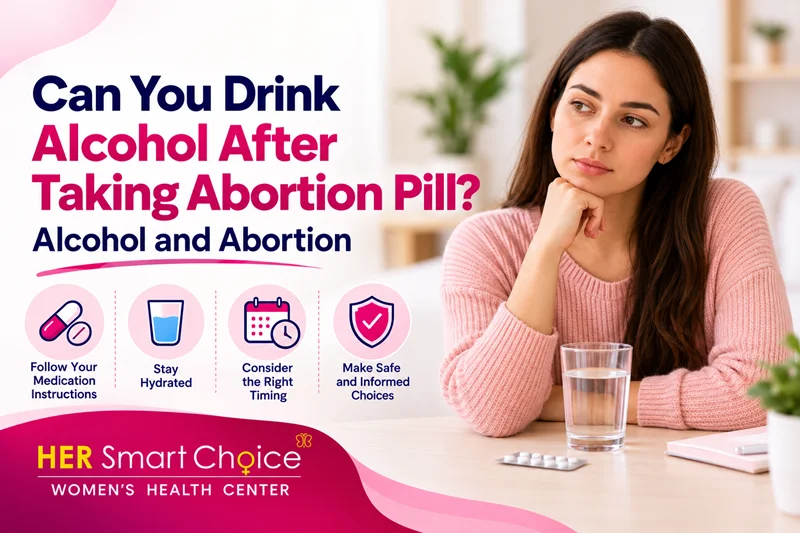

Alcohol does not directly interact with the abortion pill, and Planned Parenthood says that after medication abortion, or an in-clinic procedure without sedation, drinking is a personal choice, though going easy is recommended. The exceptions are important. If you had sedation, avoid alcohol for at least 12 hours and for as long as you're taking prescription pain medication. Ibuprofen, the most common cramp relief, also doesn't mix well with alcohol. Many people choose to hold off until the heaviest bleeding and cramping have passed so they can monitor their recovery clearly. Her Smart Choice provides licensed Ob/GYN guidance and aftercare instructions specific to your treatment.
Get SOCIAL with us!
Yes, it's generally a personal choice after medication abortion, but limiting it is smart, and a few situations (sedation, prescription pain medicine, ibuprofen use) call for real caution.
The decision to drink after a medication abortion rests with the individual. According to Planned Parenthood, if you didn't have sedation, or if you used abortion pills, drinking is your choice, though they recommend going easy. The concern isn't a direct drug interaction. It's the practical risk that alcohol dulls your awareness of physical changes and adds stress to your body during recovery.
The medication abortion regimen uses two drugs, mifepristone and misoprostol, which trigger cramping and bleeding to end a pregnancy. Our guides on how the abortion pill works and how long misoprostol stays in your system explain why the medication itself isn't the issue here: misoprostol clears the bloodstream quickly, while its effects, cramping and bleeding, continue longer.
Alcohol can mask the warning signs you need to catch, worsen nausea and dehydration, and interact with the pain medication most people use.
Alcohol won't interfere with the pills, but it can interfere with your recovery in practical ways.
It can mask warning signs. Alcohol clouds judgment and dulls physical sensations. Someone who has been drinking may not accurately gauge how heavy the bleeding is, how severe the cramping has become, or whether they're feeling feverish. Clear-headed monitoring matters most while the heaviest part of the process is happening, which is usually within the first day after misoprostol.
It can worsen side effects. Nausea, cramping, fatigue, and diarrhea are common after misoprostol. Alcohol irritates the stomach and contributes to dehydration, which can make those symptoms harder to manage.
It doesn't mix well with pain relief. Ibuprofen is the standard recommendation for medication abortion cramps. The National Institute on Alcohol Abuse and Alcoholism notes that NSAIDs, including ibuprofen and aspirin, carry a risk of gastrointestinal bleeding on their own, and combining them with alcohol significantly increases that risk. If your aftercare includes a prescription pain medicine, alcohol adds a second problem: both depress the central nervous system, which can deepen drowsiness and slow breathing.
Our guides on bleeding and cramping after a medication abortion and how long cramping lasts after misoprostol cover what to expect so you know what you'd be monitoring.
After sedation, wait at least 12 hours and until you're off prescription pain medication. After the abortion pill, there's no fixed rule, but many people wait until the heaviest bleeding, cramping, and nausea have passed.
The right timing depends on what kind of abortion you had.
After an in-clinic procedure with sedation: Planned Parenthood advises avoiding alcohol for at least 12 hours, and for as long as you're taking prescription pain medication. Sedatives stay in your system for hours, and alcohol on top of them can cause deeper sedation than expected, with drowsiness, disorientation, and slowed breathing.
After medication abortion at home: There's no universal waiting period, and the 12-hour sedation rule doesn't apply. As practical advice, many clinics suggest holding off until the most intense cramping, bleeding, and nausea have passed, often a day or two, so you can assess your own symptoms clearly. If you're taking ibuprofen for cramps, it makes sense to wait until you no longer need it. Some people have symptoms that last longer and may want to extend that window.
If your provider gave you specific instructions, follow those first. Her Smart Choice's licensed Ob/GYNs review aftercare timing during consultations, and our checklist of do's and don'ts after the abortion pill covers other recovery guidance, including what to avoid in the first days.
Heavy bleeding, severe or worsening pain, a persistent fever, or foul-smelling discharge need a call to your provider, and staying clear-headed is how you'll notice them.
Recovery after a medication abortion requires attention to physical changes. Staying alert helps you recognize symptoms that need medical care, which is a big part of why limiting alcohol makes sense.
Contact your provider promptly if you notice:
Vaginal discharge and bleeding are a normal part of recovery as the uterus clears blood, tissue, and mucus. Bleeding typically starts bright red and then lightens to pink or brown, and spotting can continue for days to weeks. Our guides on spotting vs. bleeding after abortion and what happens after taking abortion pills cover that timeline in more detail, when to call a doctor after the abortion pill lists the warning signs, and abortion pill side effects vs. complications explains where expected symptoms end and complications begin.
Fertility can return within days, so if you don't want another pregnancy soon, plan your contraception before you need it.
Alcohol isn't the only recovery topic worth planning for. According to ACOG, ovulation can resume as early as 8 to 10 days after an abortion, often before the first period, so pregnancy is possible if you have unprotected sex soon afterward.
If you don't want another pregnancy right away, our overview of birth control methods, types, effectiveness, safety, and side effects and our guide to how soon you can start birth control pills after a pregnancy can help you choose a method, and our guide to birth control options in Los Angeles can help you find care.
TL;DR: Her Smart Choice offers in-person and telehealth follow-up across Southern California, with licensed Ob/GYN guidance for aftercare questions.
Her Smart Choice provides abortion care, prenatal care, birth control, STD testing and treatment, and abnormal Pap smear follow-up, with locations in East LA, Huntington Park, Long Beach, and Van Nuys. If you have a question about alcohol, pain relief, or any symptom during recovery, you can reach a licensed provider rather than guessing. Our guides on what to expect when you take abortion tablets, telehealth abortion safety and privacy, and abortion care in Los Angeles explain what that care looks like.
There's no universal waiting period. Planned Parenthood says drinking is a personal choice after medication abortion, though they recommend going easy. Many clinics suggest waiting until the heaviest bleeding, cramping, and nausea have passed, often a day or two, and following any specific instructions from your provider.
No direct interaction is known. The concern is practical: alcohol can dull your awareness of warning signs and worsen dehydration and nausea.
It's best to avoid it. NSAIDs like ibuprofen carry a risk of stomach bleeding on their own, and alcohol raises that risk. Waiting until you're done with ibuprofen avoids the problem.
At least 12 hours, and for as long as you're taking prescription pain medication, according to Planned Parenthood. Alcohol on top of sedatives can cause dangerous drowsiness and slowed breathing.
There's no evidence that alcohol makes the abortion pill less effective. If you're worried about whether your abortion was complete, follow the follow-up testing your provider recommends.
Whether you choose to have a drink during recovery is your decision, and the medical guidance leaves room for that after medication abortion. What matters is staying clear-headed enough to notice warning signs, and avoiding alcohol altogether if you had sedation or are taking prescription pain medication or ibuprofen. If you have questions about your recovery, Her Smart Choice's licensed Ob/GYNs can help, in person or by telehealth.
Get SOCIAL with us!



East LA: 2226 E Cesar E Chavez Ave, Los Angeles, CA 90033, United States
Van Nuys: 7220 Woodman Ave #106, Van Nuys, CA 91405, United States
Long Beach: 1760 Termino Ave #223, Long Beach, CA 90804, United States
Huntington Park: 7024 Seville Ave Suite A, Huntington Park, CA 90255, United States
©2006 – 2026 HER SmartChoice, DBA Cathedral Medical Inc. | Sitemap | Terms & Conditions | Privacy Policy