

If you miss 1 birth control pill, what you should do depends on the type of pill and how late you are. For most combined birth control pills, if only one hormonal pill is late or missed, take it as soon as you remember and continue your next pills at the usual time, even if that means taking two pills in one day. According to the CDC's 2024 U.S. Selected Practice Recommendations for Contraceptive Use, you generally do not need backup contraception after missing just one combined hormonal pill.
Get SOCIAL with us!
However, progestin-only birth control pills can have different instructions, so check the name of your pill before deciding what to do.
If you had unprotected sex after missing your pill and are worried about pregnancy, emergency contraception or a pregnancy test may be appropriate depending on when the missed pill occurred and what type of pill you use.
Take the missed hormonal pill as soon as you remember, take your next pill on schedule, and continue normally. Backup contraception generally isn't needed for one missed combined pill.
If you miss one hormonal pill from a combined birth control pill pack, take the missed pill as soon as you remember and take your next pill at the normal time. You may take two pills on the same day. You generally do not need condoms or emergency contraception solely because of one missed combined pill.
The situation is different if you missed two or more hormonal pills, you are using a progestin-only pill, you missed pills immediately before or after your hormone-free interval, you had unprotected sex after missing pills, or you are unsure which type of birth control pill you take.
A single missed pill usually does not mean your birth control has completely stopped working. The important thing is to get back on schedule as quickly as possible.
If you are still deciding which contraception is right for you, see this guide to birth control methods, effectiveness, safety, and side effects.
The exact instructions can vary by pill formulation, so the package instructions or a healthcare professional should take priority.

Not significantly, if you catch up promptly. One missed pill usually doesn't give ovulation enough time to resume, though where in the pack it falls matters.
Missing one combined birth control pill generally does not significantly increase pregnancy risk when you take the missed pill as soon as possible and continue taking the rest of your pills correctly. The CDC specifically recommends no additional contraceptive protection for one late or missed combined hormonal pill.
Birth control pills work primarily by preventing ovulation. Combined pills contain estrogen and progestin, which suppress the hormonal signals responsible for releasing an egg.
One missed hormonal pill usually does not provide enough time for ovulation to resume in someone who has otherwise been taking the pills correctly.
Research reviewed by the CDC has found that missing one to several combined hormonal pills at times away from the hormone-free interval generally resulted in little follicular activity and a low risk of ovulation.
However, where the missed pill occurs in your pack matters. Missing pills near the hormone-free interval can be more concerning because it can extend the time your ovaries are exposed to less hormonal suppression. That is why missing multiple pills around the beginning or end of a pill pack can require additional precautions.
For a deeper explanation of how these medications work, read birth control pills: how they work, types, benefits, and risks. If you'd rather compare how consistently effective different methods are overall, evaluating birth control effectiveness and pregnancy risks breaks that down in more detail.
Under 48 hours late, take the missed pill, resume your normal schedule, and skip backup contraception.
Combined oral contraceptives contain both estrogen and progestin.
If one hormonal pill is late by less than 24 hours, the CDC considers it a late pill rather than a missed pill. Take it as soon as possible and continue your normal schedule.
If 24 to less than 48 hours have passed since the pill should have been taken, the recommendation is essentially the same: take the missed pill as soon as you remember, take the next pill at your usual time, continue the rest of the pack normally, and know it's okay if you take two pills on the same day. No additional contraceptive protection is generally needed.
You might notice mild nausea after taking two pills close together. This is usually temporary.
If you regularly forget pills, however, a method that does not require daily remembering may be more convenient. Options include the birth control implant, IUD, patch, ring, or shot. Our overview of hormonal vs. non-hormonal birth control can help you think through the trade-offs of switching.
You can also compare the pill with a long-acting option in birth control pill vs. implant: which is right for you.

It depends which one you're on. Traditional progestin-only pills need backup contraception if you're more than 3 hours late; Slynd generally doesn't for a single missed white pill.
This is where the answer becomes more complicated.
Progestin-only pills (POPs), sometimes called the mini-pill, do not all have identical missed-pill instructions.
Traditional progestin-only pills have historically required more precise timing than combined pills. For some POPs, taking a pill more than 3 hours late can mean you need backup contraception for the next 48 hours.
Newer formulations have different timing rules. For example, Slynd (drospirenone) has a different missed-pill schedule, and one missed white hormonal pill generally does not require backup contraception, according to Planned Parenthood's missed-pill guidance.
That means you should not automatically apply the combined-pill rule to every mini-pill.
If you take your pill more than three hours later than usual: take the pill as soon as you remember, continue taking one pill each day at your normal time, use condoms or avoid vaginal sex for the next 2 days, and if you had unprotected sex and are concerned about pregnancy, ask a healthcare professional whether emergency contraception is appropriate.
Planned Parenthood similarly notes that traditional progestin-only pills become less effective when taken more than three hours late.
Slynd is a progestin-only pill with a different dosing schedule.
If you miss one white hormonal pill, take it as soon as possible and continue your schedule. You may end up taking two pills in one day, and backup contraception generally is not necessary for one missed white pill.
Because POP instructions differ by product, check your pill pack before deciding whether you need backup contraception.
Emergency contraception usually isn't needed after one missed combined pill, but the calculation changes with multiple missed doses or missed pills near the start of your pack.
If you missed only one combined hormonal pill, emergency contraception is generally not required solely because of that missed pill.
The situation changes if you missed two or more hormonal pills, missed pills during the first week of your pack, extended the hormone-free interval, had unprotected sex during the time your contraceptive protection may have been reduced, are using a progestin-only pill with stricter timing requirements, or are unsure which pill you missed.
For combined pills, the CDC recommends considering emergency contraception when two or more consecutive hormonal pills are missed during the first week and unprotected sex occurred during the previous five days.
Emergency contraception works best when used promptly after unprotected sex. Learn more about timing in when to take Plan B.
If you are considering emergency contraception and want to understand potential costs, see how much does emergency contraception cost.
A missed pill can shift your bleeding pattern in either direction, and a late period alone doesn't mean pregnancy, though testing may still be worth it.
Missing a birth control pill can temporarily change your bleeding pattern.
You may experience spotting, light bleeding, a period that comes earlier or later, a lighter-than-usual period, or a missed withdrawal bleed.
Planned Parenthood notes that missing one or more birth control pills can disrupt the menstrual cycle for a month or two in some people.
A late period after a missed pill does not automatically mean you are pregnant. Hormonal changes caused by missed pills can affect bleeding. Our guides on how to stop spotting from birth control right away and can stress cause spotting while on birth control cover related bleeding-pattern questions.
However, pregnancy is possible if you missed pills and had unprotected sex during a period when contraceptive protection may have been reduced.
If your period is late, you can learn more about possible causes in is your period 4 days late, period 2 to 5 days late, 17 days period late, and why is my period 19 days late.
For additional guidance about pregnancy testing, see how soon after unprotected sex you can reliably take a pregnancy test.
Test if you missed multiple pills and had unprotected sex, or if your expected bleeding doesn't show up, but be mindful that testing too early can give a false negative.
Consider taking a pregnancy test if you missed multiple pills and had unprotected sex, you missed a pill and your expected period or withdrawal bleeding does not occur, you have pregnancy symptoms, you are unsure whether your contraception was effective, or you want reassurance after a contraceptive mistake.
A pregnancy test cannot immediately detect a pregnancy from sex that happened very recently. Testing too early can produce a negative result even when pregnancy has occurred.
If you are unsure about timing, read pregnancy tests at two weeks: when to test.
If you have a significantly delayed period, you can also review when to worry after missing a period.
This is a different situation from missing one. Take the most recent missed pill, discard the rest, and use backup contraception for 7 days.
Missing two or more consecutive hormonal combined pills is different from missing one.
According to the CDC, if at least 48 hours have passed since a hormonal pill should have been taken: take the most recent missed pill as soon as possible, discard any other missed pills, continue taking the remaining pills at the usual time, and use condoms or avoid vaginal sex until you have taken hormonal pills for 7 consecutive days.
If the missed pills occurred during the final week of hormonal pills in the pack, the CDC recommends avoiding the hormone-free interval in certain circumstances by starting a new pack immediately after finishing the hormonal pills.
If two or more pills were missed during the first week and you had unprotected sex within the previous five days, emergency contraception should be considered.
This is one reason why missing one pill and missing multiple pills should not be treated as the same situation.
The response scales with how many pills you missed and which pill type you're on. There's no single answer that applies to every situation.
The key takeaway is that "I missed one birth control pill" is not enough information to determine the exact recommendation for every pill user. The type of pill, timing of the missed dose, position in the pack, and recent sexual activity all matter.
Yes, this is the expected way to catch up after one missed combined pill, and it's generally not dangerous, just occasionally mildly uncomfortable.
Yes. After missing one combined hormonal pill, it is normal to take the missed pill when you remember and then take the next pill at your regular time, even if both pills are taken on the same day.
Taking two pills in one day is generally not dangerous, although you may experience temporary nausea, breast tenderness, headache, or spotting.
Do not intentionally double your dose beyond the instructions for missed pills.
If you want to understand what happens when two pills are taken on the same day, see what happens if you take 2 birth control pills in one day.
Reach out if you're unsure which pill you take, missed more than one, had unprotected sex, or keep forgetting doses regardless of your best efforts.
Consider contacting a doctor, nurse practitioner, pharmacist, or telehealth provider if you are unsure which birth control pill you take, missed two or more pills, had unprotected sex after missing pills, need emergency contraception, have a period that is unusually late, have a positive pregnancy test, repeatedly forget your pills, or want to switch to a method that requires less daily attention.
A telehealth consultation can be particularly convenient if you want help determining what to do after a missed pill, discussing emergency contraception, reviewing pregnancy-test timing, or choosing a different contraceptive method.
If you are in California, qualified pharmacists can also furnish certain self-administered hormonal contraceptives and emergency contraception under California rules. The California State Board of Pharmacy maintains a registry of participating pharmacies and pharmacists.
For people seeking reproductive healthcare in California, state law also protects access to contraception, and people under 18 can generally obtain birth control without parental consent.
Frequent missed pills often mean the daily format doesn't fit your routine, not that you're doing something wrong. Longer-acting methods remove that daily step entirely.
If missing pills happens frequently, the problem may not be that you are using birth control incorrectly, it may simply mean that a daily method does not fit your routine.
You could discuss alternatives such as the birth control implant, an IUD, the birth control shot, a vaginal ring, or the birth control patch. These options can reduce the need to remember contraception every day.
For example, you can learn about the birth control implant, birth control ring, weekly birth control patch, Depo shot, female IUD guide, and birth control IUDs: all you need to know.
If you prefer to discuss your options privately from home, a telehealth consultation with Her Smart Choice can help you understand your contraception options and determine what type of care may be appropriate for your situation. Our guide to birth control options in Los Angeles and what to ask before booking a birth control appointment can help you prepare.

If you miss one combined hormonal birth control pill, take it as soon as you remember and continue taking the remaining pills on schedule. You may take two pills on the same day, and additional contraception is generally not needed.
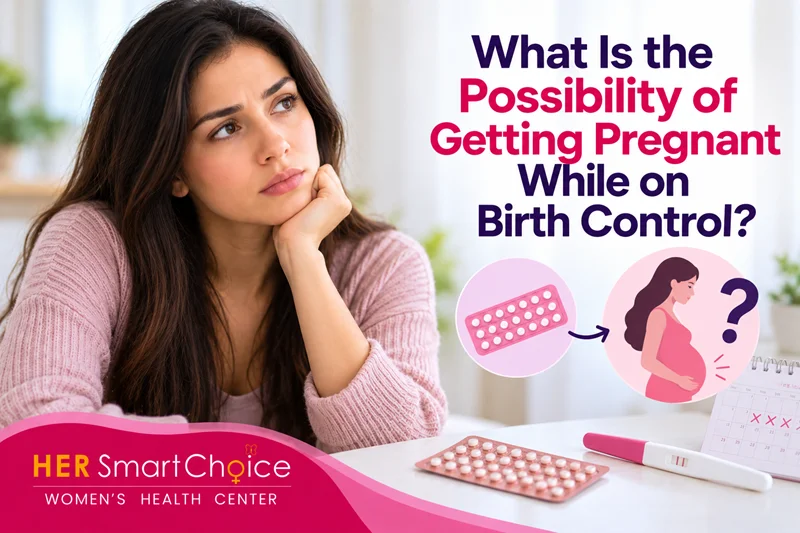
Pregnancy is unlikely from missing one combined hormonal pill if you otherwise took your pills correctly and resume them promptly. However, risk can differ with progestin-only pills, multiple missed pills, or missed pills around the hormone-free interval.
For one missed combined hormonal pill, yes. Take the missed pill as soon as possible and take your next pill at the usual time, even if that means taking two pills on the same day.
Usually not if you missed only one combined hormonal pill. Emergency contraception may be considered when multiple hormonal pills are missed, particularly during the first week of the pack when unprotected sex occurred during the previous five days.
It depends on which progestin-only pill you use. Traditional progestin-only pills can require backup contraception if taken more than three hours late, while newer pills such as Slynd have different instructions.
It can. Missing pills may cause spotting, unexpected bleeding, or a period that arrives earlier or later than expected. A late period does not automatically mean pregnancy, but testing may be appropriate if you had unprotected sex.
For one missed combined hormonal pill, the CDC generally does not recommend backup contraception. If two or more consecutive hormonal pills are missed, use condoms or avoid vaginal sex until hormonal pills have been taken for seven consecutive days.
Yes. Emergency contraception can be used after contraceptive mistakes when pregnancy is possible. Whether it is recommended depends on the type of pill, how many pills were missed, when they were missed, and when unprotected sex occurred.
If you miss 1 combined birth control pill, take it as soon as you remember and continue your pill pack normally. You can take two pills on the same day, and you generally do not need backup contraception or emergency contraception solely because of one missed pill.
The rules are different for some progestin-only pills, so always check the specific medication you use.
If you missed multiple pills, had unprotected sex, your period is late, or you are worried about pregnancy, don't panic. You can use emergency contraception when appropriate, take a pregnancy test at the right time, or speak with a healthcare professional.
If remembering a daily pill is difficult, Her Smart Choice can also help you explore other birth control options and telehealth care that may better fit your routine.
Get SOCIAL with us!


.png)
.png)

East LA: 2226 E Cesar E Chavez Ave, Los Angeles, CA 90033, United States
Van Nuys: 7220 Woodman Ave #106, Van Nuys, CA 91405, United States
Long Beach: 1760 Termino Ave #223, Long Beach, CA 90804, United States
Huntington Park: 7024 Seville Ave Suite A, Huntington Park, CA 90255, United States
©2006 – 2026 HER SmartChoice, DBA Cathedral Medical Inc. | Sitemap | Terms & Conditions | Privacy Policy




.svg)
.svg)