

Spotting on Birth Control: What It Is, Why It Happens, and What to Do
Spotting on birth control — often called breakthrough bleeding — means light vaginal bleeding or brown discharge that appears between expected periods or instead of a full flow. It’s a common response to changes in hormonal contraception. This article breaks down what spotting looks like, the biology behind it, how often it happens with different methods, when it’s usually harmless, and when to seek medical care. If spotting feels worrying or lasts longer than you’d expect, Her Smart Choice offers supportive, non-promotional guidance and care navigation to help you decide if a clinical evaluation is needed. Many people go through an adjustment phase in the first months after starting or switching methods; knowing typical timelines, common causes, and practical steps can ease anxiety and help keep contraception effective. Below you’ll find clear definitions, cause-and-effect explanations, method-by-method comparisons, red-flag signs, practical ways to reduce spotting, and a description of how Her Smart Choice can support you with personalized reproductive health questions.
Follow Us!
Is Spotting on Birth Control Normal? Understanding Breakthrough Bleeding
Spotting — medically called breakthrough bleeding — is most often a harmless response to hormonal shifts from contraception and usually improves within about three to six months after starting or changing a method. It happens because the uterine lining (the endometrium) becomes unstable when hormone levels fluctuate or when progestin is dominant, causing light, irregular bleeding rather than a full menstrual bleed. When contraception is used correctly, spotting rarely means the method has failed; however, bleeding that continues beyond the typical adjustment window or occurs with “red-flag” symptoms should be checked. Current guidance (as of 2024) notes that many low-dose and progestin-only regimens produce transient spotting while the body adapts, and clinicians often recommend observing for a few cycles before making changes. This section explains what spotting usually looks like and how common it is so you know what to expect.
How spotting usually differs from a period:
- Light brown or pink staining rather than a steady bright red flow that needs protection.
- Short, intermittent episodes lasting hours to a few days instead of the 3–7 days of a typical period.
- Irregular timing — often outside the withdrawal-bleed window for combined pills.
What is Spotting and How Does It Differ from Menstrual Bleeding?
Spotting is usually scant bleeding or brown discharge that reflects older blood. A menstrual period is a coordinated shedding of the full uterine lining and shows as a heavier, brighter red flow. Mechanistically, spotting comes from localized endometrial instability or minor surface shedding, while a period follows a predictable hormonal withdrawal that causes a more complete lining breakdown. In practice, spotting rarely soaks a pad or tampon and often appears as a few drops or light staining in underwear; it can be intermittent and unpredictable. Recognizing these visual and timing differences helps you tell harmless breakthrough bleeding apart from heavier or abnormal bleeding that may need evaluation.
How Common is Spotting During Birth Control Use?
How often spotting happens depends on the method and timing. Up to half of new combined oral contraceptive users report some breakthrough bleeding in the first three months, while progestin-only methods and implants can cause irregular bleeding for a longer period. Factors that increase spotting include ultra‑low‑dose estrogen pills, missed or late pills, smoking, and medicines that change hormone metabolism. Most breakthrough bleeding decreases as the lining stabilizes; many people see improvement by three to six months, although progestin-only users may experience more persistent irregularity. Knowing these prevalence ranges can help you decide when to monitor and when to seek a method change or medical evaluation.
What Are the Common Causes of Spotting on Contraception?
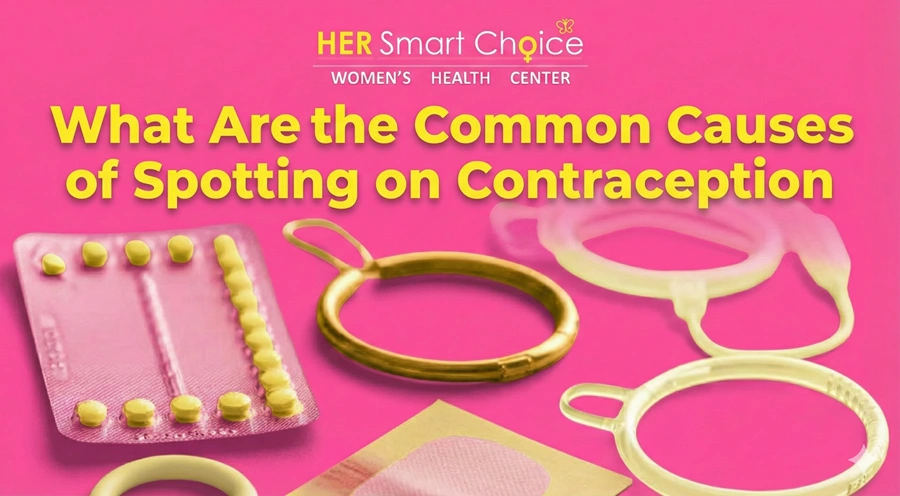
Spotting while on contraception can stem from several causes: hormonal adjustment, inconsistent dosing, drug interactions that lower hormone levels, or unrelated medical issues. Identifying the cause directs the right response. Progestin tends to thin the endometrium, making it prone to small breaks; missed or late pills create abrupt hormone dips that trigger bleeding; and conditions such as pregnancy, STIs, polyps, or fibroids can also cause irregular bleeding. Below are the most frequent causes and a quick table that links cause, mechanism, and expected timeline to help set realistic expectations.
Common causes include:
- Hormonal adjustment after starting or switching contraception.
- Missed, late, or interacting medications that reduce hormone levels.
- Pregnancy-related bleeding (including implantation) and infections.
- Structural issues such as fibroids or polyps that cause irregular bleeding.
The following table summarizes cause, mechanism, and expected timeline so you can match symptoms to likely explanations and next steps.
Different causes produce spotting through specific biological mechanisms and tend to follow predictable timelines.
| Cause | Mechanism | Typical Timeline |
|---|---|---|
| Hormonal adjustment (start/switch) | Endometrial instability from progestin or low estrogen | Days–months; often improves within 3–6 months |
| Missed or late pills / drug interactions | Acute drop in circulating hormones causing breakthrough bleeding | Immediate to 1–2 cycles; consider a pregnancy test if several pills were missed |
| Pregnancy or implantation bleeding | Early placental changes can cause light bleeding | Early pregnancy timing; evaluate promptly if suspected |
| Infection (STI) | Local inflammation and a fragile cervix lead to irregular spotting | Days–weeks; treatable with appropriate therapy |
| Fibroids or polyps | Local structural bleeding from lesions | Ongoing until lesion is treated or removed |
How Do Hormonal Adjustments Lead to Spotting?
Hormonal adjustments cause spotting because progestin-rich states thin the endometrium, creating a fragile surface that can bleed with small hormonal shifts or minor irritation. When estrogen is low or fluctuates, tiny blood vessels in the superficial lining may break and produce light bleeding rather than a coordinated menstrual withdrawal. This is common with ultra‑low‑dose combined pills or after switching to progestin-only methods; the lining needs time to remodel to the new hormone environment. For most people, reassurance and watchful waiting for about three months is reasonable unless bleeding is heavy or accompanied by worrying symptoms — in which case further evaluation is needed. This mechanism also explains why short-term estrogen supplementation under provider supervision sometimes helps selected patients.
Can Missed or Late Pills Cause Breakthrough Bleeding?
Yes. Missing or taking pills late disrupts the steady hormone levels that keep the lining stable. Sudden drops in hormones often trigger spotting or heavier breakthrough bleeding. What to do right away depends on the pill type and timing, but common guidance is to take the most recent missed pill as soon as you remember and use backup protection if multiple pills were missed. If you had unprotected sex during the lapse, a pregnancy test may be appropriate. Occasional light spotting after a single missed pill doesn’t always mean contraceptive failure, but repeated lapses raise both bleeding irregularity and pregnancy risk. Consistent daily dosing and checking for drug interactions are important preventive steps.
How Does Spotting Vary by Types of Birth Control?
Bleeding patterns vary because each delivery method and hormone mix affects the endometrium and systemic levels differently. Progestin-only methods (pills, implants, hormonal IUDs, injectables) commonly cause more unpredictable spotting because they create a chronically thin, fragile lining. Combined estrogen–progestin methods usually cause spotting mainly during the initial adjustment period. The copper IUD, being non-hormonal, typically increases menstrual bleeding rather than causing isolated spotting. The table below compares typical spotting patterns and helpful notes for common methods.
The following table compares methods so you can anticipate likely experiences and discuss options with your provider.
| Method | Typical Spotting Pattern | Prevalence / Notes |
|---|---|---|
| Combined oral contraceptives (COC) | Early-cycle spotting that usually settles within ~3 months | Common — up to about 50% of new users with low-dose pills |
| Progestin-only pill (POP) | Irregular, often unpredictable spotting | Greater long-term irregularity compared with COC |
| Hormonal IUD | Irregular spotting initially; periods often lighter over time | Spotting common first 3–6 months; bleeding often reduces later |
| Copper IUD | Generally heavier menstrual bleeding, less isolated spotting | May increase flow and cramping |
| Implant | Frequent irregular spotting early and sometimes long-term | High early irregular bleeding; many improve over months |
| Depo-Provera shot | Irregular bleeding or prolonged spotting; some develop amenorrhea | Patterns vary; irregularity common in initial months |
What Spotting Patterns Are Associated with Oral Contraceptives?
Combined pills commonly cause breakthrough spotting early as the body adjusts to exogenous estrogen and progestin. Many users see improvement within three cycles as the lining stabilizes. Low‑dose or ultra‑low‑dose estrogen pills are more likely to cause early spotting because the estrogen may not be enough to stabilize the lining right away. Progestin‑only pills often cause more persistent, unpredictable bleeding that can last beyond six months for some people. Knowing these patterns helps decide whether to wait a few cycles or consider an earlier change.
How Do IUDs, Implants, and Other Devices Affect Spotting?
Hormonal devices like levonorgestrel IUDs and implants often cause irregular spotting in the first months because of local progestin effects on the lining; many people using an IUD later report lighter periods or no periods at all, while implants may continue to produce irregular bleeding longer. The copper IUD usually increases overall menstrual bleeding and cramping rather than causing isolated spotting — an important distinction when choosing between hormonal and non‑hormonal options. Injectable contraceptives also change bleeding patterns: some users have irregular or prolonged bleeding, others develop amenorrhea with continued use. These device-specific expectations help guide counseling and decisions about continuing or changing methods.
When Should You Worry About Spotting on Birth Control? Signs to Seek Medical Advice
Most spotting is harmless, but certain signs call for prompt clinical assessment because they suggest infection, significant blood loss, or other problems. Red flags include heavy bleeding that soaks a pad or tampon every hour, severe pelvic pain, fever, persistent bleeding lasting longer than one to two weeks, bleeding after sex, or pregnancy symptoms such as a missed period and nausea. The short triage checklist and table below connect symptoms to urgency and suggested actions so you can decide whether to seek urgent care, schedule a routine appointment, or monitor at home. If you’re unsure, contacting a clinician for personalized advice is appropriate.
Key red-flag symptoms to watch for include:
- Heavy bleeding or passing large clots, or rapid saturation of protection.
- Severe pelvic or abdominal pain, dizziness, or fainting sensations.
- Fever, foul-smelling discharge, or other signs of infection.
- Bleeding that continues beyond about two weeks or bleeding after sex.
These signals help distinguish harmless adjustment bleeding from conditions that need immediate attention. The next table pairs symptoms with recommended actions.
| Symptom | Why it’s Concerning | Suggested Action |
|---|---|---|
| Heavy bleeding (soaking pad/hour or large clots) | Risk of significant blood loss and anemia | Seek urgent care or ER evaluation |
| Severe pelvic pain or fainting | Possible torsion, infection, or ectopic pregnancy | Urgent evaluation and imaging as needed |
| Fever, foul discharge | Suggests pelvic infection or PID | Contact provider promptly for testing and treatment |
| Bleeding >2 weeks or postcoital bleeding | May indicate structural lesions like polyps or other disease | Schedule evaluation within 1–2 weeks; consider ultrasound |
What Are Red Flag Symptoms Like Heavy Bleeding or Severe Pain?
Heavy bleeding — defined as saturating a pad or tampon in an hour or passing large clots — can lead to anemia or hemodynamic instability if it continues and should prompt emergency care. Severe pain that disrupts daily life or comes with faintness or low blood pressure is another urgent warning sign; it could mean ectopic pregnancy, ovarian torsion, or a serious infection. Fever and foul-smelling discharge point to pelvic inflammatory disease or another infection that needs antibiotics and evaluation. Recognizing these signs and acting quickly reduces risk and speeds diagnosis and treatment.
When is It Important to Consult a Healthcare Provider?
Contact your healthcare provider promptly if spotting is paired with any red-flag signs, if bleeding lasts longer than about two weeks, or if you suspect pregnancy despite contraception. During an evaluation, clinicians typically do a pregnancy test, STI screening, pelvic exam, and pelvic ultrasound when indicated to look for causes such as retained tissue, structural lesions, or ectopic pregnancy. For persistent but non‑urgent spotting, schedule a routine appointment within one to two weeks so problems can be investigated without an unnecessary ER visit. Preparing a concise symptom log — dates, bleeding description, related symptoms, and contraceptive details — helps clinicians triage faster and more accurately.
Right after listing when to consult, it helps to know what supportive options exist for triage and care navigation.
Her Smart Choice can assist with triage and connect you to appropriate clinical care when spotting raises concern, offering non‑promotional guidance to help decide whether you need urgent care or routine evaluation.
How to Stop Spotting on Birth Control: Effective Management and Prevention Tips

Reducing or stopping spotting starts with consistent, correct use of your method and addressing modifiable factors like smoking or interacting medications. Providers may suggest short‑term measures such as NSAIDs for cramping, temporary estrogen supplementation for select combined‑pill users, or changing to a different formulation or method if bleeding persists and affects quality of life. Medication reviews, lifestyle adjustments, and clear guidance on missed‑dose management are practical first steps that help people minimize irregular bleeding. Below are concrete actions and common medical options used to manage persistent spotting.
Practical actions to reduce spotting include:
- Stick to a strict dosing schedule for pills — set daily reminders to avoid missed doses.
- Review all prescription, over‑the‑counter medicines, and supplements with a clinician to spot interactions.
- Consider smoking cessation and healthy weight management as part of long‑term stabilization.
What Lifestyle Changes Can Reduce Spotting?
Smoking speeds the breakdown of some hormones and is linked to more breakthrough bleeding, so quitting often improves bleeding patterns and has wide health benefits. Stabilizing weight and eating a balanced diet can support steady hormone balance for some people. Reviewing OTC and prescription medicines — especially enzyme‑inducing drugs — with a clinician can identify interactions that lower contraceptive hormone levels and trigger spotting. Pairing these lifestyle steps with consistent contraceptive use supports long‑term stability and may reduce the need for medical changes.
What Medical Treatments or Adjustments Help Manage Spotting?
If lifestyle measures aren’t enough, clinicians might recommend short‑term estrogen supplementation, a temporary course of combined pills, or switching to a formulation with more estrogen to stabilize the lining for combined‑method users. For progestin‑only users, options include trying a different progestin formulation, switching to a combined method if appropriate, or treating any underlying condition found on evaluation. NSAIDs can reduce bleeding‑related prostaglandins and relieve cramping; surgical or procedural options address structural causes like polyps or fibroids. Any medication or method change should be supervised by a healthcare provider to keep contraception safe and effective. What are the types of birth control methods?
How Can Her Smart Choice Support You with Spotting on Birth Control?
Her Smart Choice provides supportive, evidence‑informed reproductive health guidance focused on education, triage, and care navigation — not on prescribing treatment directly. We help users interpret spotting patterns and connect them to appropriate care. Services include clear educational resources about common bleeding patterns, clinician consultations for personalized assessment and contraceptive counseling, and referrals or care navigation to local providers for in‑person testing or procedures. Our role is to reassure, clarify options, and help prioritize urgency so people get timely evaluation when needed. If you’re unsure whether your spotting needs immediate attention, Her Smart Choice can help you organize your symptom history, identify red flags, and suggest the best next step.
What Services and Guidance Does Her Smart Choice Provide?
Her Smart Choice offers a range of supportive services: educational materials about contraception and bleeding patterns, structured triage conversations to assess urgency, and clinician-led consultations for personalized counseling. We also help with care navigation and referrals when diagnostic testing, imaging, or in‑person treatment is required, connecting you to appropriate clinical resources while emphasizing patient-centered, evidence‑based decision-making. These services are designed to supplement clinical care by improving understanding and helping people prepare for effective medical evaluations. For many users, this supportive pathway reduces anxiety and speeds access to the right level of care.
How to Access Personalized Reproductive Health Support?
To get the most from a consultation, prepare a brief symptom log with dates of spotting, a description of bleeding and any clots, your contraceptive method and how you’ve been using it, and any symptoms such as pain or fever. In a triage or consultation session, expect a focused review of your history, a discussion of likely causes, and clear recommendations — whether that’s urgent evaluation, routine follow‑up, or conservative management. Her Smart Choice helps by outlining what clinicians will want and by recommending next steps, whether that means watching for a few cycles, scheduling tests, or arranging referrals. Documenting your experiences and questions ahead of time makes visits more efficient and increases the chance of a timely, accurate assessment.
- Prepare: Track bleeding dates, contraceptive details, and symptoms.
- Consult: Use our educational resources or schedule a triage conversation to clarify urgency.
- Navigate: If needed, request a referral or guidance for local clinical evaluation.
These steps help move you from uncertainty to a clear plan so spotting can be evaluated appropriately and efficiently.
Frequently Asked Questions
Spotting after switching methods is often a normal adjustment as your body adapts to new hormones. If it continues beyond three to six months or comes with other concerning symptoms, check in with your healthcare provider. They can determine if the bleeding is a benign response or if a method change is warranted. Keeping a simple record of dates and symptoms helps your provider give the best advice.
Yes. Stress can change your hormone balance and affect your cycle, which may lead to spotting while on birth control. If you notice more breakthrough bleeding during stressful times, consider stress‑management techniques like mindfulness, regular exercise, or counseling. If spotting persists or gets worse, consult your healthcare provider for evaluation and support.
Yes. Hormonal methods (pills, patches, rings, hormonal IUDs, implants, shots) commonly cause irregular spotting as the body adjusts. Non‑hormonal methods, like the copper IUD, more often lead to heavier menstrual bleeding rather than isolated spotting. Knowing these differences can help you set realistic expectations for whichever method you choose.
Spotting is usually light, brown or pink, and doesn’t require protection; pregnancy‑related bleeding can have other signs such as cramping, nausea, or a missed period. If you suspect pregnancy or experience heavy bleeding, severe pain, or other concerning symptoms, take a pregnancy test and contact your healthcare provider for further evaluation.
Factors that can make spotting more likely include smoking, excessive alcohol use, significant weight changes, and certain medications that interfere with hormone levels. Smoking is a key contributor because it speeds hormone metabolism. Healthy lifestyle choices — quitting smoking, balanced diet, and regular activity — can help stabilize hormones and may reduce spotting.
Over‑the‑counter NSAIDs (like ibuprofen) can help with cramping and may reduce bleeding by lowering prostaglandin activity. However, check with a healthcare provider before starting any medication to make sure it’s appropriate and won’t interfere with your method. Always follow dosing instructions on the label or your provider’s advice.
Before your appointment, keep a symptom log with dates of spotting, the amount and color of bleeding, any clots, and related symptoms (pain, fever). Note your contraceptive method, how consistently you use it, and any other medicines or supplements you take. This information helps your provider understand the pattern quickly and recommend the right next steps.
Conclusion
Understanding spotting on birth control — why it happens and how it’s managed — can help you feel more confident about your reproductive health. Recognizing that breakthrough bleeding is often normal, and knowing the signs that need medical attention, helps you keep contraception effective and gives you peace of mind. For personalized support and care navigation, consider reaching out to Her Smart Choice — we can help you interpret what’s happening and connect you with the right care. Take the next step in your reproductive health with clear information and a plan.
Follow Us!